
WiseTotes

How Our Custom Tote Bag Process Works

Follow six stages from requirements and quotation to sampling, approval, production, inspection and delivery.
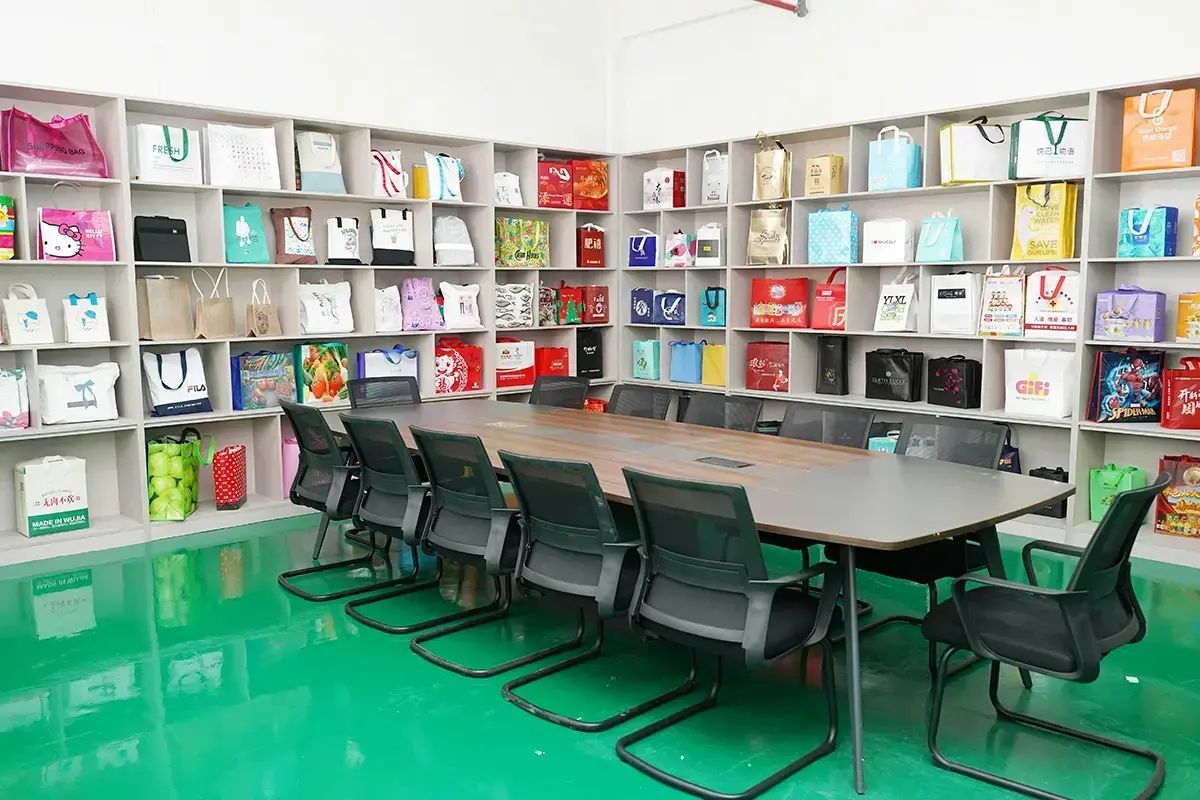
Tote bag meeting room with finished custom samples displayed on the walls.

Process at a Glance

Four checkpoints summarize the route from enquiry to packed cartons; the six stages below show each required confirmation.

Custom tote bag project brief and quotation icon

Brief and Quotation

Send product type, quantity, size and design requirements. Material, process, packaging, price and project conditions are confirmed before quotation.

Custom tote bag sample development and approval icon

Sample and Written Approval

Check size, material, construction, color, branding, print effect and appearance before the approved sample becomes the production standard.

Custom tote bag bulk production and inspection icon

Production and Inspection

Purchasing and production follow the approved reference, with IQC, IPQC and FQC checks throughout.

Custom tote bag packing and delivery preparation icon

Packing and Delivery

Bags are packed to the confirmed requirements; cartons and quantities are checked, and export documents are prepared for the agreed delivery method.

Six Stages from Brief to Delivery

Each stage shows the buyer input, factory work and approval or output needed before the project moves forward.
Custom tote bag samples displayed beside a project review table.

1. Submit Requirements

Send enough information to identify the bag, customization, quantity, price level and delivery. For open choices, include a product image, physical reference or description of the intended result.
  • Product brief
    Identify the tote type, use, product image or physical reference, and quantity. Bag style and quantity determine the material and price level.
  • Specifications and structure
    Provide dimensions, material, colors and construction details such as the base, inner pocket and zipper.
  • Artwork, packaging, and delivery
    Share logo files, decoration method, branding positions, references, packaging, destination and requested timing.
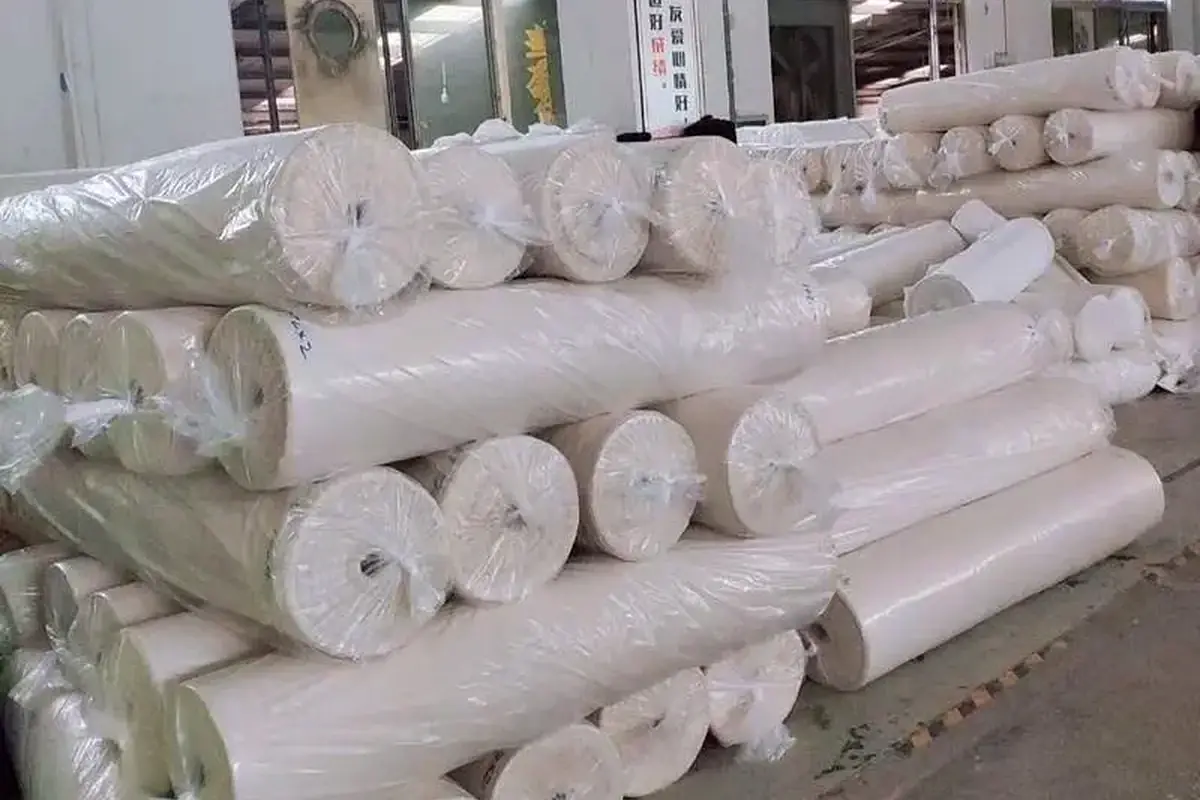
Fabric rolls prepared for custom tote bag material review.

2. Review and Quotation

Material, construction, decoration, testing, packaging and commercial requirements are reviewed before a product proposal and written quotation are prepared.
  • Feasibility review
    Construction, material, decoration, packaging and testing are checked for feasibility. Complex products take longer to review.
  • Material and process confirmation
    Canvas weight and printing method are matched to artwork and quantity while dimensions and construction are confirmed.
  • Packaging confirmation
    Individual packing, labels, cartons and other packing choices are agreed before quotation.
  • Written quotation
    The proposal states the agreed scope, price, charges, payment terms and timing based on current information.
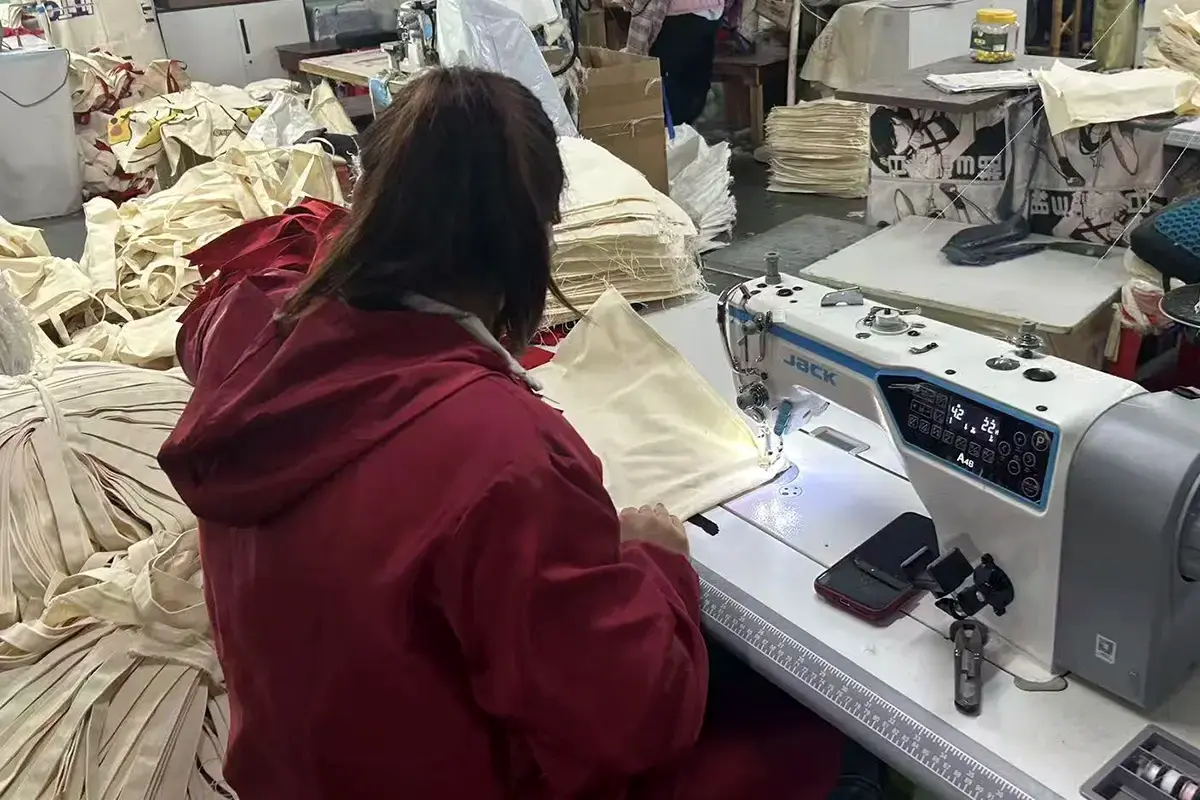
Worker sewing natural canvas tote bag panels at an industrial machine.

3. Sample Development

After files, sample requirements and fees are confirmed, one sample is cut, decorated, sewn and checked for construction, workmanship, branding and visible details before approval.
  • Locked sample reference
    Confirm artwork, material, dimensions, color, construction, logo method, packaging and sample requirements before cutting.
  • Sample fee
    Fees are generally USD 10–45, depending on design, material, process, size, quantity and customization. Exact fees and any later order credit are confirmed before payment.
  • Timing
    Standard sampling takes 5–7 days; rush sampling takes 3 days and costs extra.
  • Freight and revisions
    Freight, preparation time, revision scope and additional charges are confirmed in writing. Cost and timing depend on design and requirements.
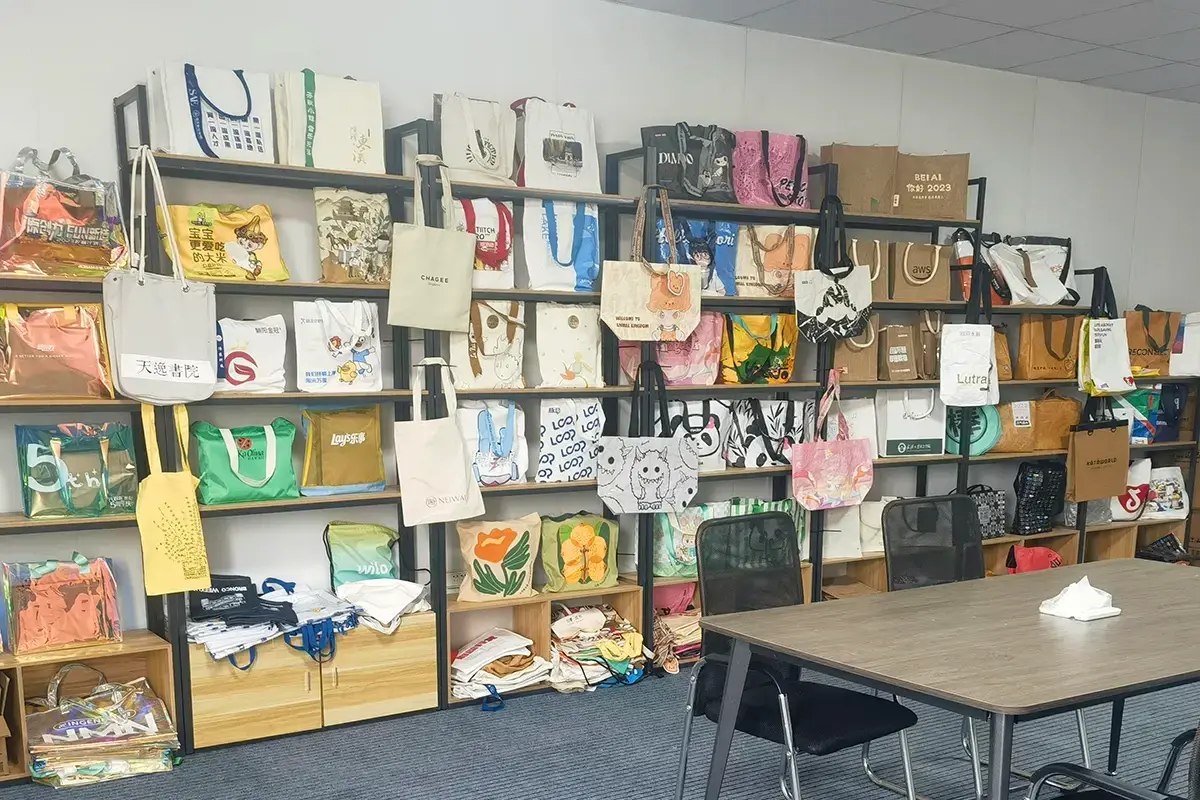
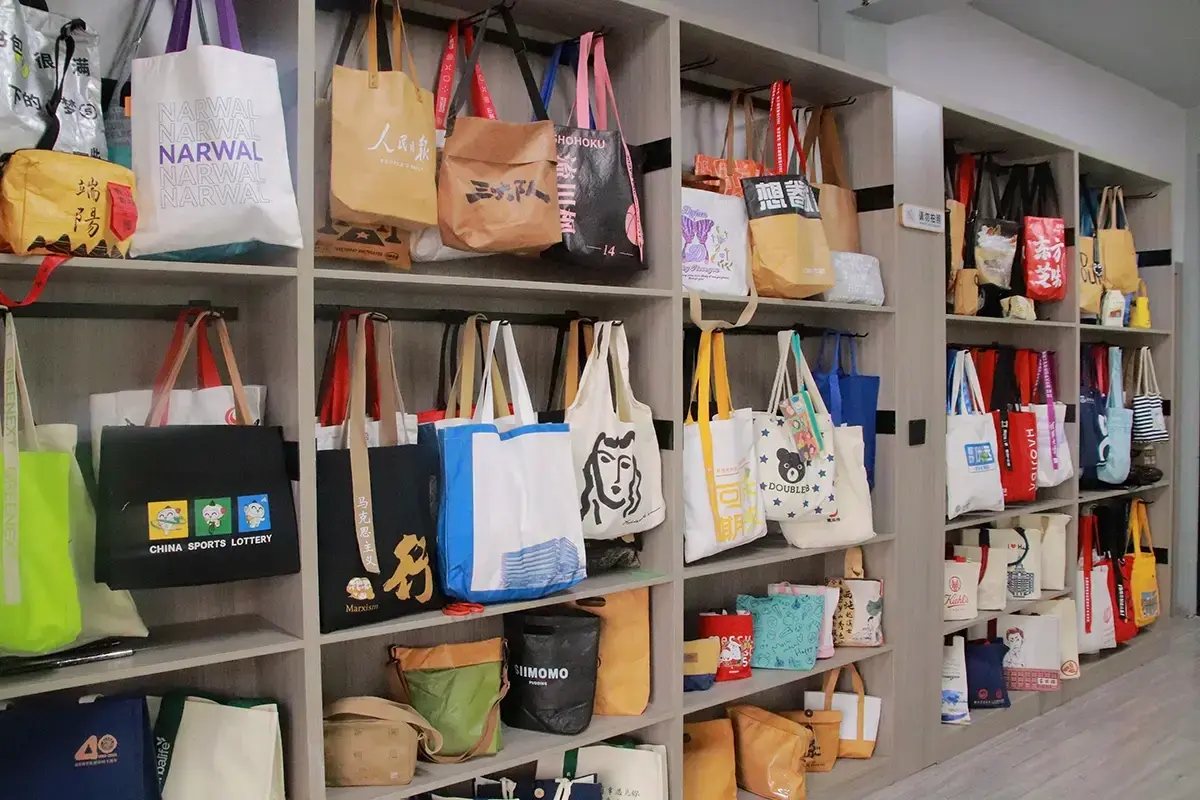
Finished custom tote bag samples arranged on showroom shelves.

4. Approve the Production Sample

The buyer checks the sample against project requirements. Agreed changes are completed before the sample and final specifications are approved in writing as the production standard.
  • Product review
    Check size, material, construction, color, logo placement, printed effect, workmanship, and finished appearance.
  • Revision decision
    Identify each change and confirm its effect on price, timing or sample work before proceeding. Adjustment time depends on the number of revisions.
  • Written approval
    Record the approved sample and final specifications as the reference for bulk production.
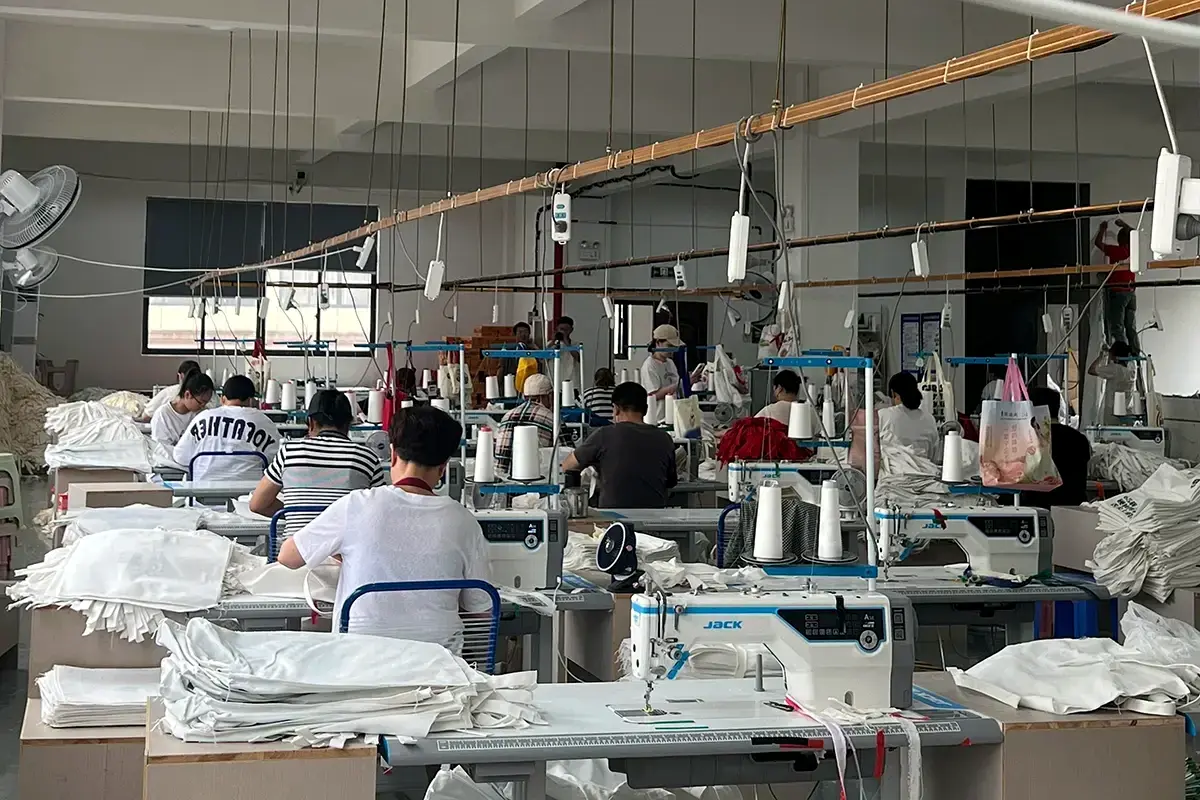
Sewing team assembling canvas tote bags across the production floor.

5. Bulk Production and Inspection

Unless agreed otherwise in writing, purchasing and production are scheduled after written sample and specification approval, confirmation of order documents and production requirements, clearance of the required 50% deposit, and completion of all artwork, packaging, testing and production requirements.
  • Production control
    Material receipt, fabric inspection, cutting, printing, embroidery, sewing and assembly follow the approved sample and order reference.
  • IQC and IPQC
    IQC checks incoming fabric and accessories. IPQC reviews and records cutting, sewing, printing, placement and stitch strength.
  • FQC
    FQC records appearance, dimensions, branding, packing and quantity before shipment release.
  • Production timing
    Standard production takes 20–25 days; rush production takes 15 days, subject to the current schedule and material availability.
  • Independent review
    A third-party inspection can be arranged before shipment when agreed for the order.
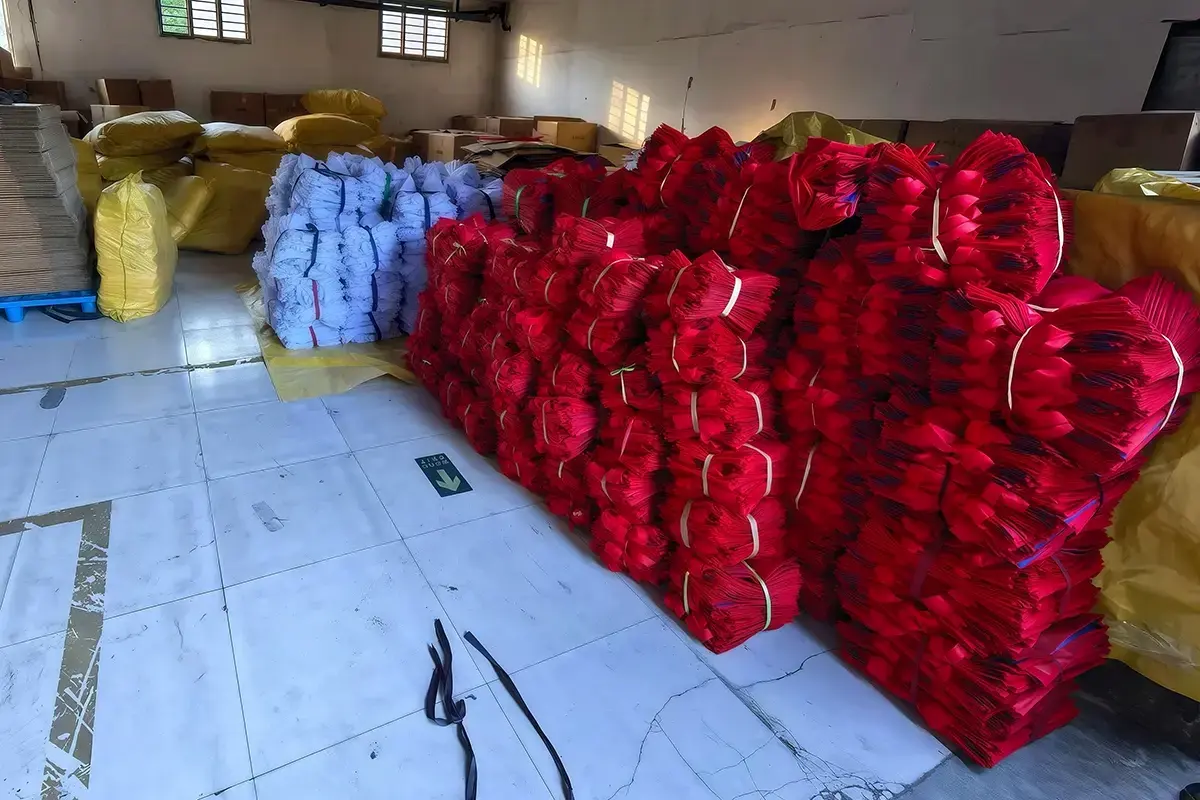
Bundled red tote bag components prepared for packing and delivery.

6. Packing and Delivery

Accepted products are packed to confirmed requirements, documented and prepared for the selected shipping arrangement. Delivery timing depends on the shipping method.

  • Packing requirements
    Apply confirmed individual, protective or custom packaging, including cards, inserts, labels, barcodes, carton marks and other agreed details.
  • Cartons and documents
    Check cartons and quantities, then prepare the applicable packing, shipment and export documents.
  • Delivery arrangement
    Prepare shipment under the method and Incoterms® rule in the accepted order documents.

Production, Inspection and Packing in Hangzhou

Production, inspection and packing take place at the WiseTotes factory in Hangzhou. Records and checks keep each order tied to its approved sample, specification and requirements.

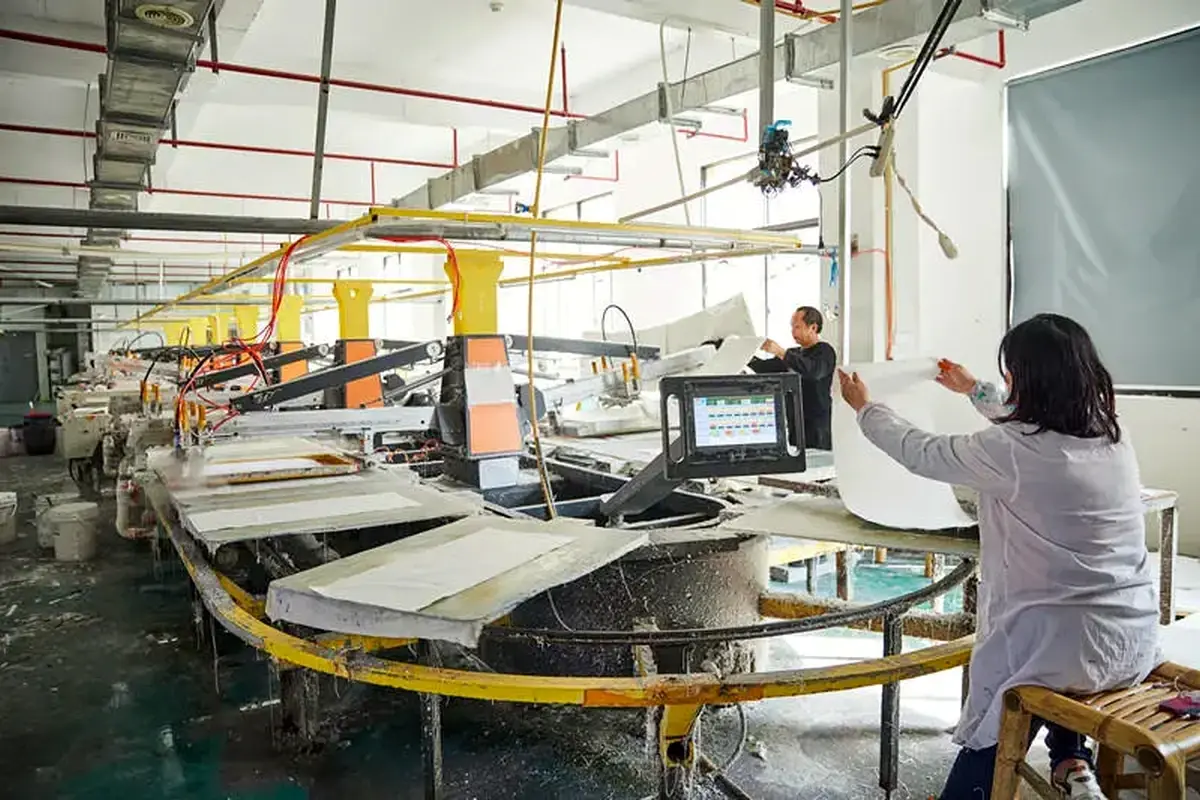
Operators running fabric panels through automated production equipment.

Tote Bag Production

Material receiving, fabric inspection, cutting, screen printing, sewing and assembly follow the approved sample and specification on WiseTotes' own lines. Approved sample changes can be applied on the factory floor.

Uniformed workers sewing printed canvas tote bags at individual stations.

Three-Stage Quality Checks

IQC checks incoming fabric and accessories; IPQC covers cutting, sewing and printing; FQC covers appearance, size, packing and quantity. Material, production and final inspection records support project review.
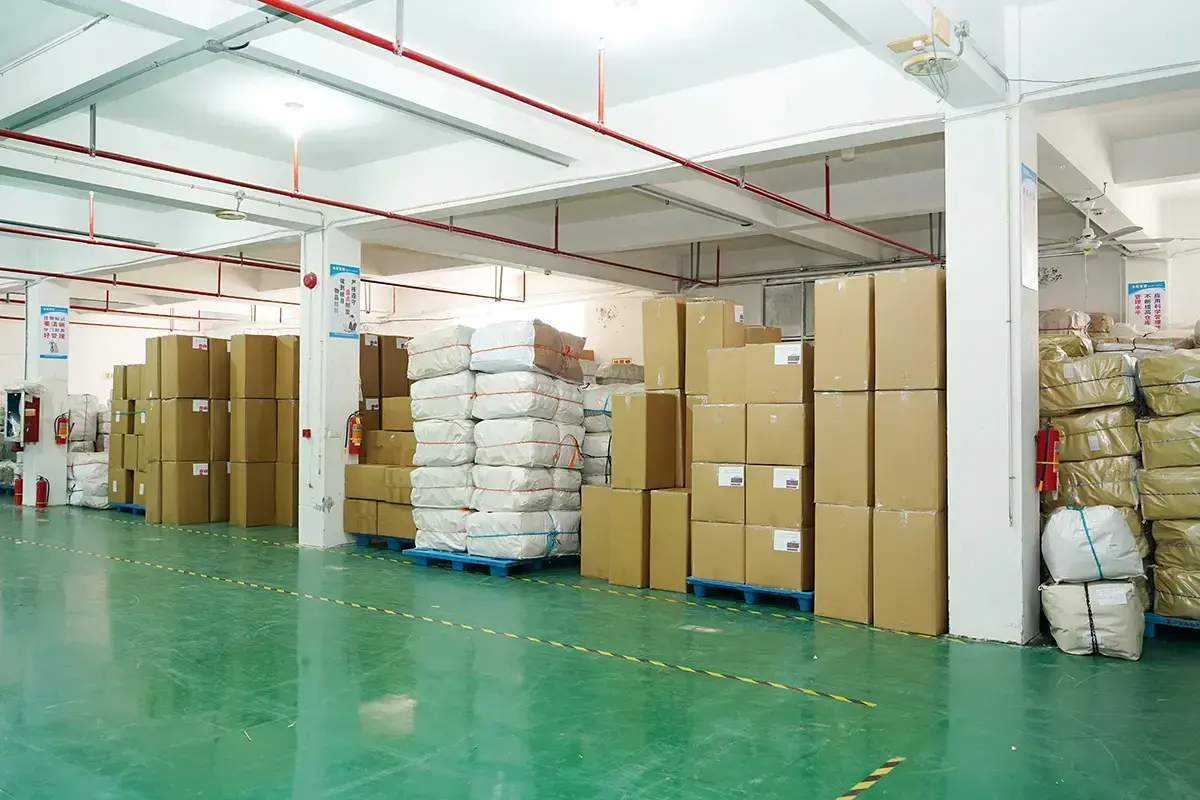
Packed cartons and wrapped tote bag bales stored on warehouse pallets.

Packing and Shipment Preparation

Accepted bags are packed to the confirmed plan; cartons are marked; quantities are checked; packing, shipment and export documents are prepared.

Prepare Your Order Brief

Send bag type, use, dimensions, material, quantity, artwork, printing or decoration method, packaging, destination and timing for project review and quotation.

Send Your Requirements
100 pcs
Standard MOQ; applicable quantity is confirmed by product and project
5–7 days
Standard sampling; 3-day rush costs extra and is confirmed by design and process
20–25 days
Standard production; 15-day rush is subject to schedule and material availability

Quotation, Sampling and Production FAQs

Answers cover required information, approvals and conditions affecting cost, timing, production and inspection.

Send product type, use, dimensions, material preference, colors, construction, quantity, logo artwork or design, printing or decoration method, packaging, destination and timing. For undecided details, include a reference image or describe the intended result. Special materials, complex structures, custom testing and special packaging are confirmed per project.
Sample fees are generally USD 10–45, depending on design, material, process, size, quantity and customization. Standard sampling takes 5–7 days; rush sampling takes 3 days and costs extra. Exact fees, freight, preparation time, revision scope and any later order credit are confirmed before payment. Cost and timing depend on design and requirements, and revisions affect timing. Bulk production follows the sample and specifications approved by the buyer in writing.
Unless agreed otherwise in writing, bulk production starts after written approval of the sample and final specifications, confirmation of order documents and production requirements, clearance of the required 50% deposit, and completion of all artwork, packaging, testing and production requirements. The approved sample is the production-line reference.
IQC checks incoming fabric and accessories; IPQC checks cutting, sewing, printing, placement and stitch strength; FQC checks appearance, dimensions, branding, packing and quantity. Checks follow the approved sample, specification sheet or written quality standard. Third-party inspection can be arranged before shipment when agreed for the order.
Sample timing depends on design, material, structure, process, required files and revisions. Standard production takes 20–25 days; rush production takes 15 days, subject to the current schedule and material availability. Bulk timing also depends on product type, quantity, confirmed specifications, testing, packaging, payment and production requirements. The schedule is confirmed in the applicable quotation or order documents.